enterprise software

B2B

Creating a better Post-Collision Response for Verizon Connect Reveal

Creating a better Post-Collision Response for Verizon Connect Reveal

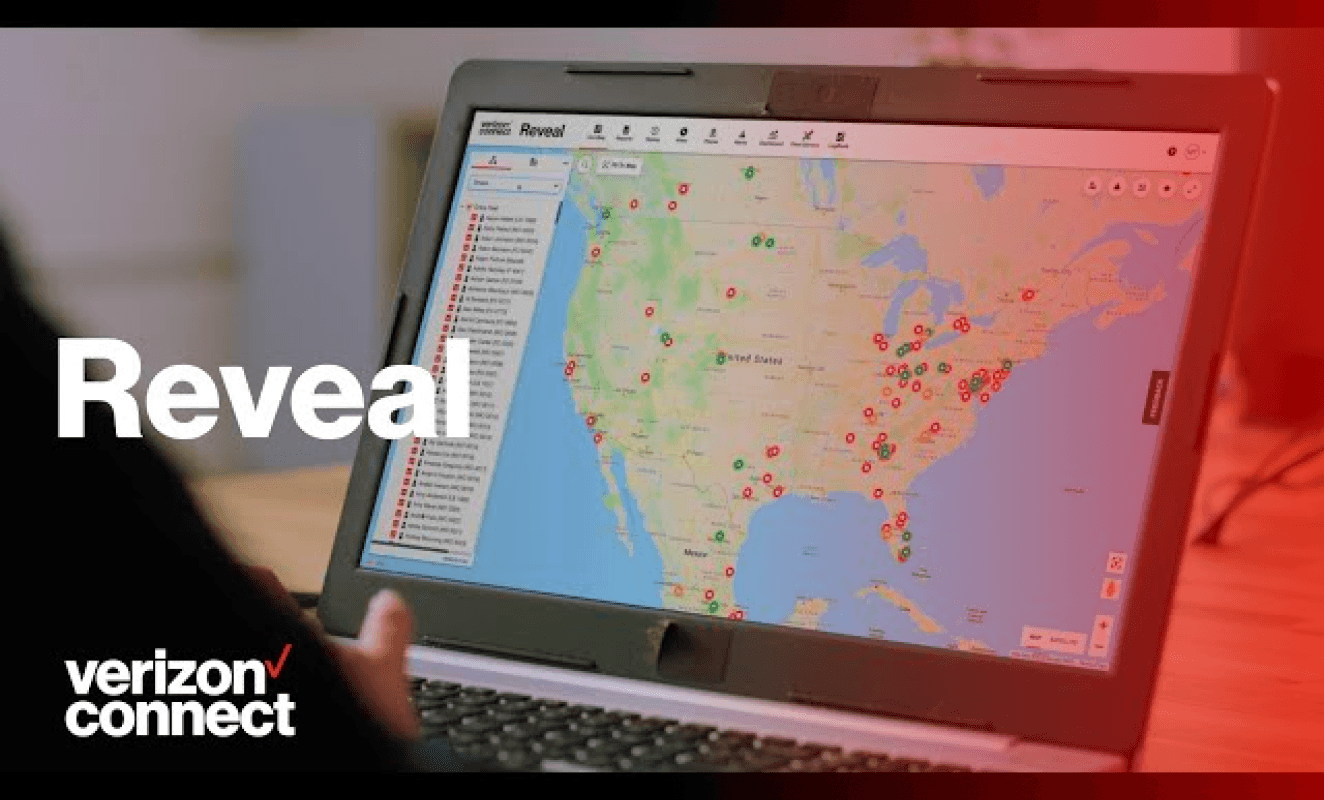
Verizon Connect Reveal is a fleet management software that help drive safety, productivity and efficiency for customers of various scales. In this 4 months collaboration, I led the high fidelity design of the collision response flow.

I had a wonderful time working with our industry partner, VZC Reveal team.

Project Partner

Verizon Connect Reveal

My Role

Design Lead

User Researcher


Technologies

Figma, UserInterviews
overview

The impact of a post-collision response system

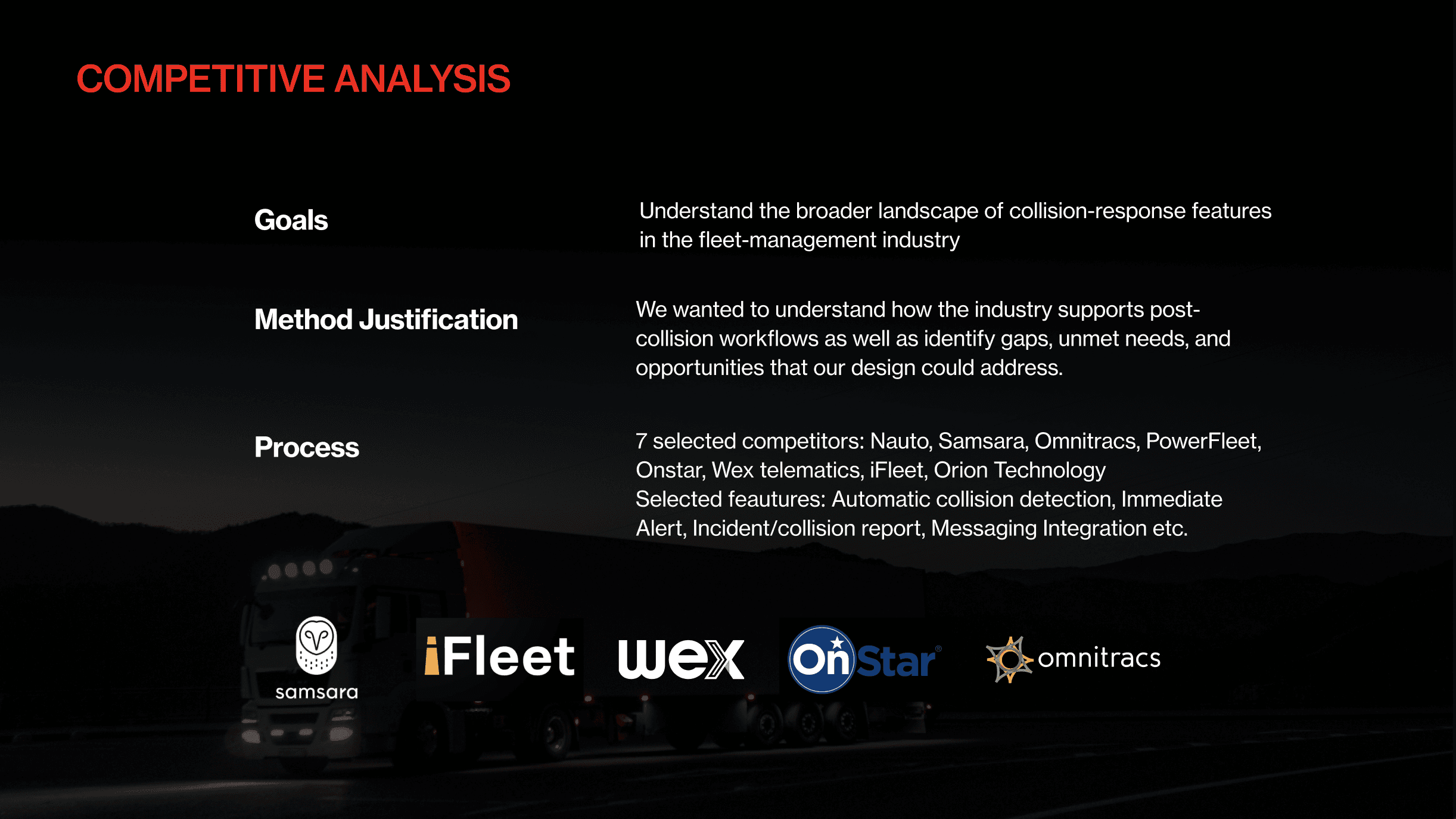
While competitors like Samsara and Nauto are expanding into post-accident assistance, delivering integrated collision response experience positions, Verizon Connect has yet to have an integrated collision response feature.


High Stake

From research, it is clear to me that post-collision moments are legally, financially, and operationally critical. Delays, fragmented workflows, or lost documentation can increase liability exposure, insurance costs, driver downtime, and reputational risk.

Design solution

Entry point

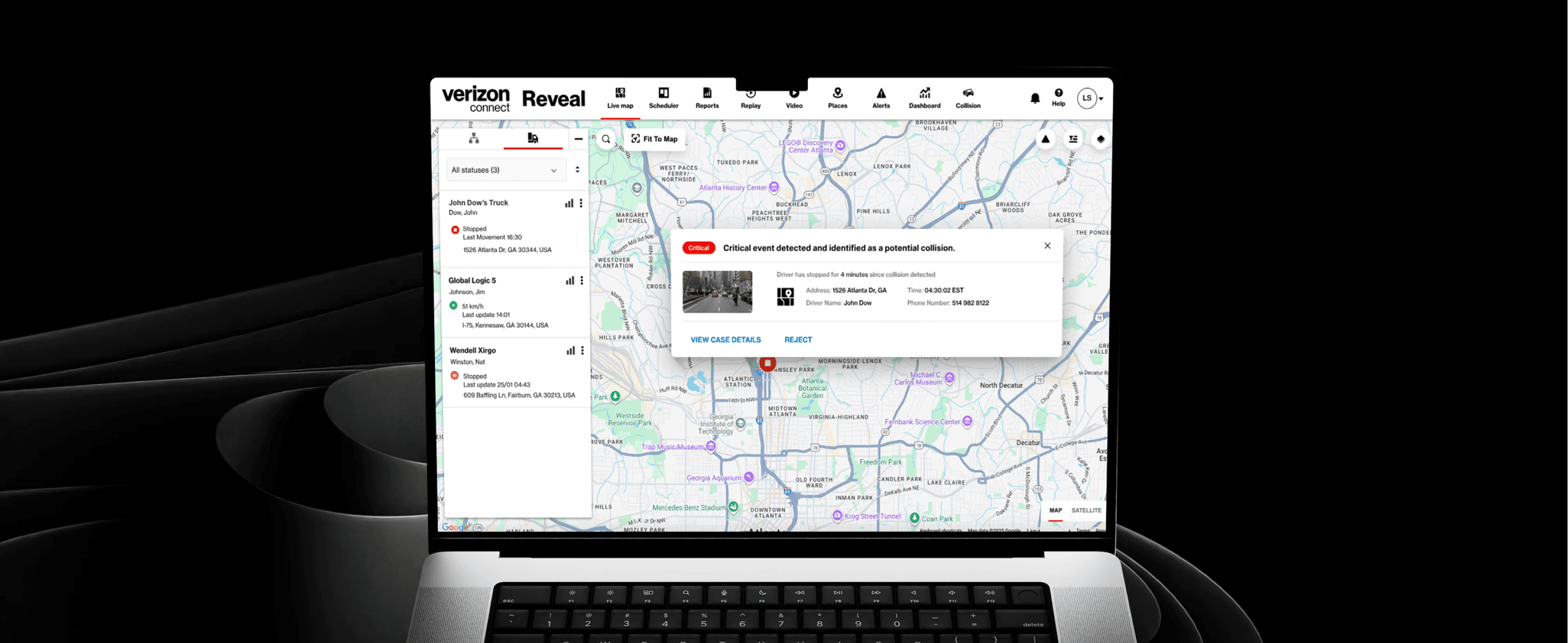
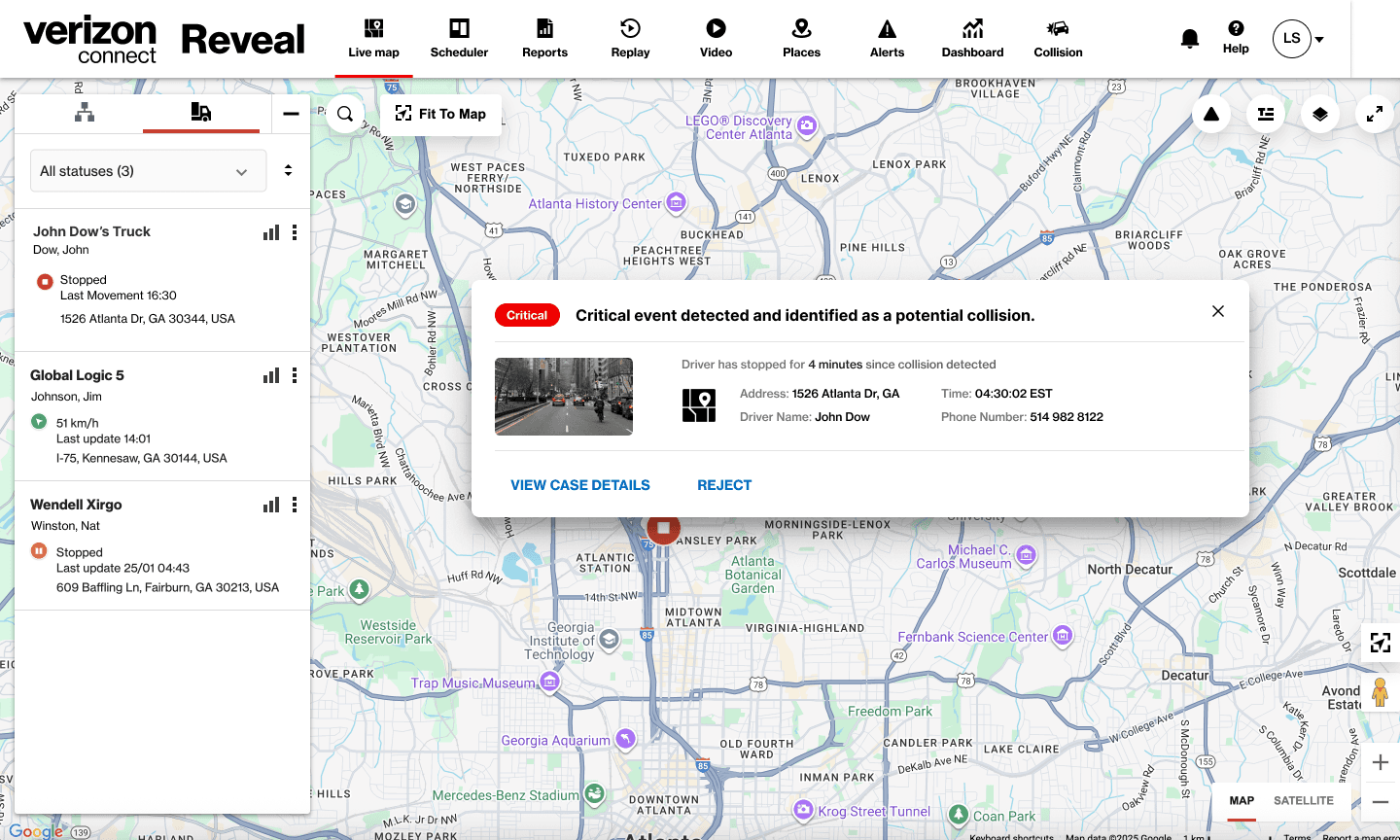
When a collision is detected by Verizon’s VTU(Vehicle Tracking Unit), it alerts the manager or dispatcher. From here, the manager need to make a series of decisions.


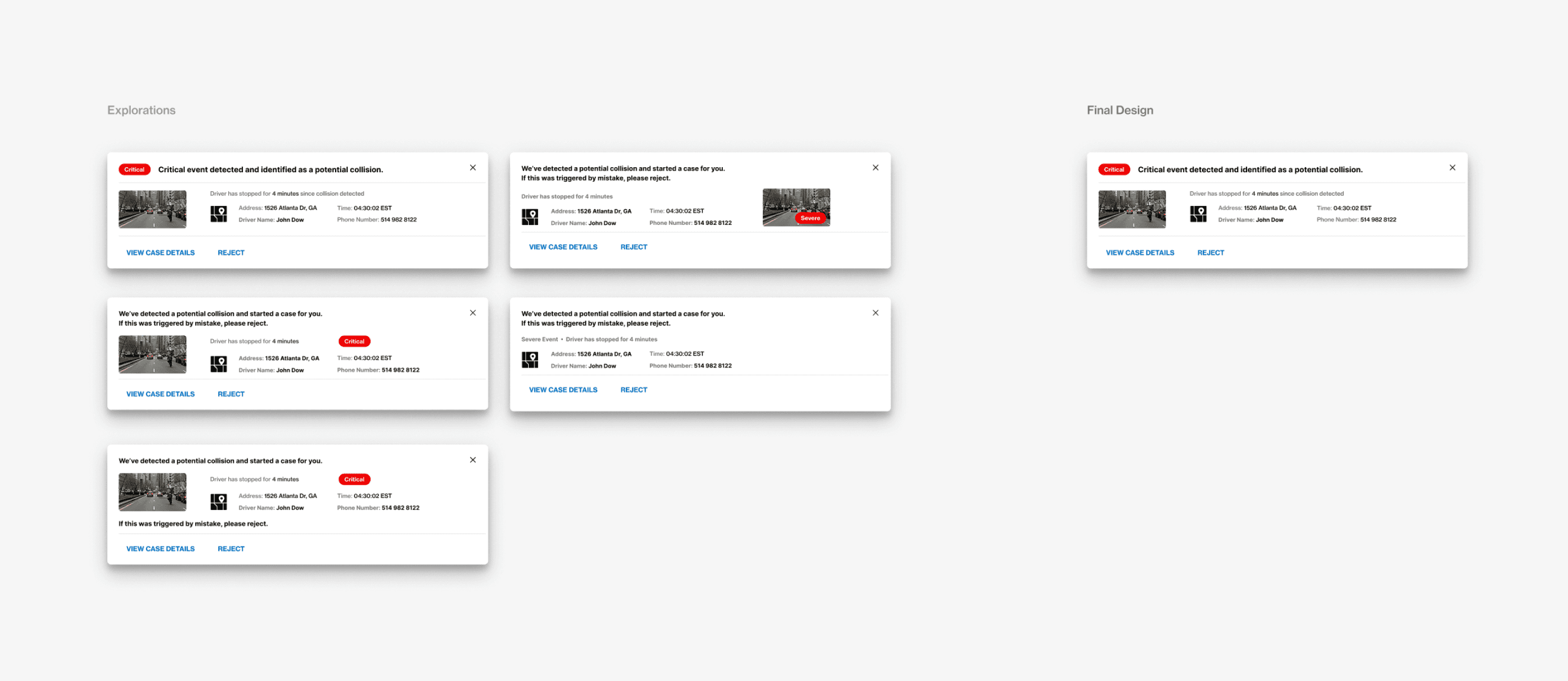
I knew this modal needed to contain everything a fleet manager would need to see in this moment. Highly scannable, and immediately actionable.


Design solution

Error prevention - and why they matter

Pop-up modals are good for bringing attention to a real-time event that needs a fleet manager’s action.


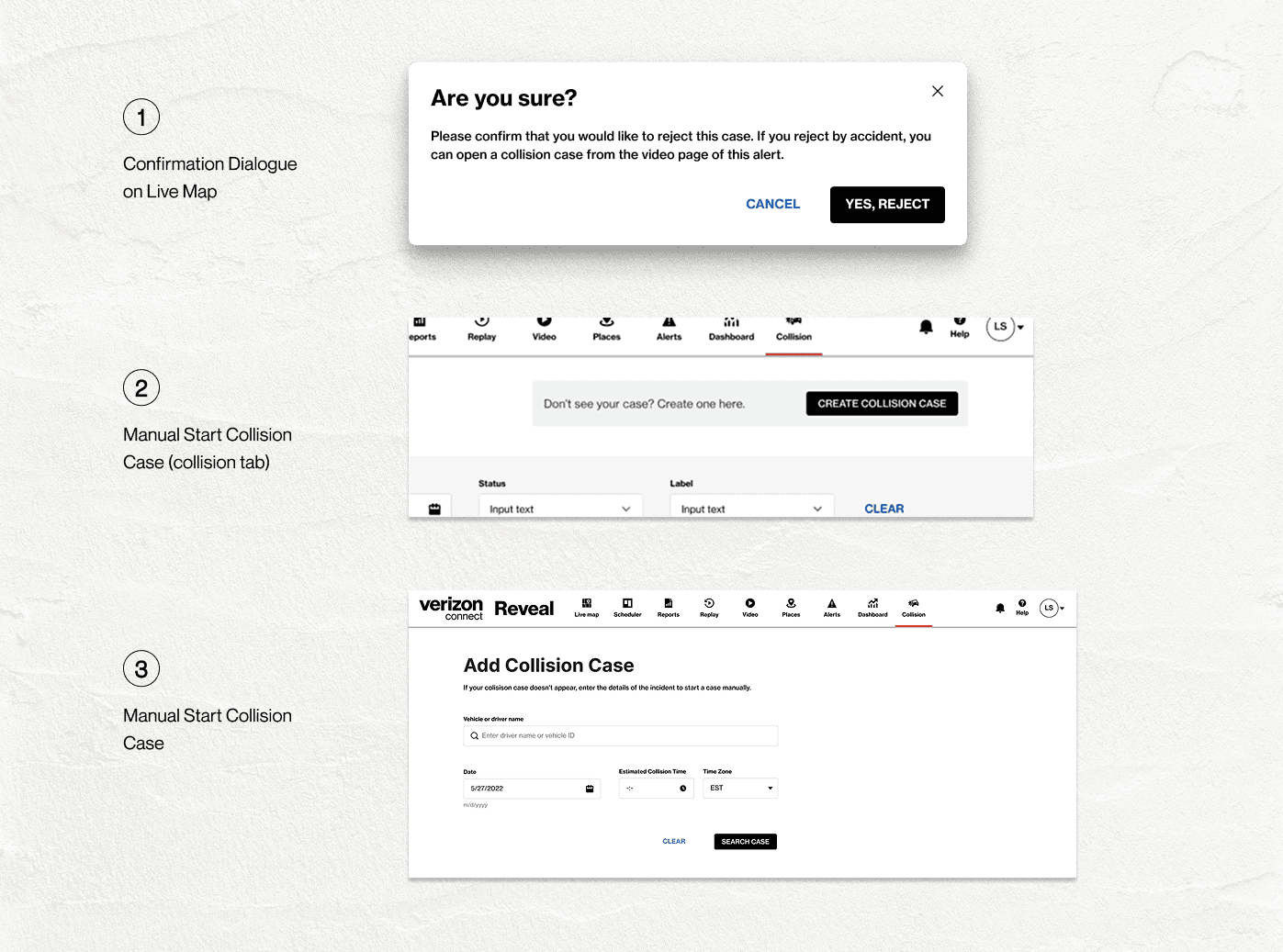
But in the case that they accidentally close it, some fallbacks are needed. The low-hanging fruit is a confirmation dialog. If fleet managers close the popup modal without confirming the case, the case will be available on the collision homepage.


Not all cases are detected by Verizon’s in-cab equipment. So I added an option to manually open a case. This ensures managers have full control and aren’t limited by automated detection alone.

Design solution

Information hierarchy is key

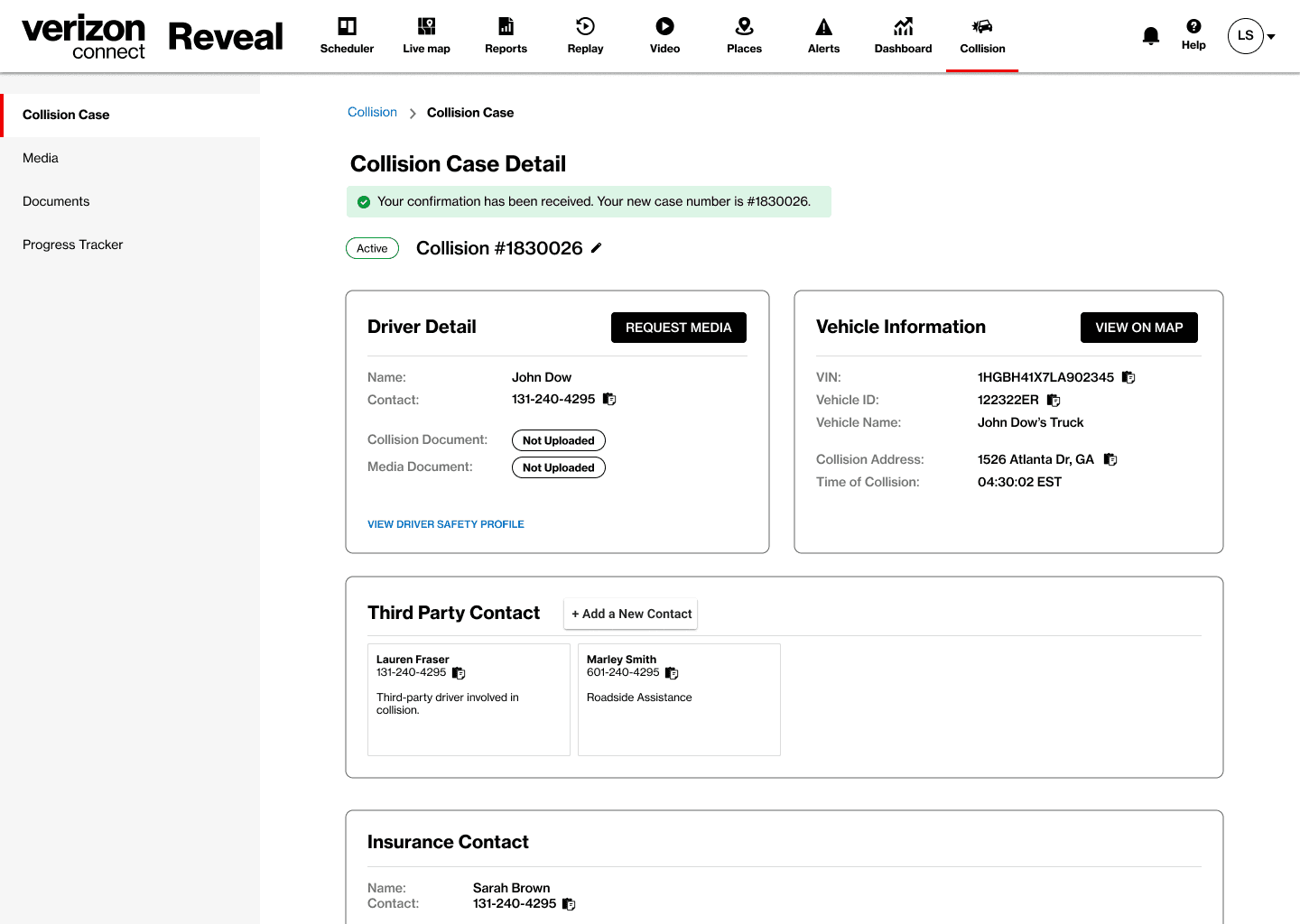
Collision tab helps managers keep track of

From talking to managers and drivers,


Maintained contextual access

While deciding on navigation structure and IA, I made sure to enable easy return to the case detail page. All related views are architected around the active collision page, so managers can stay on task.


Design solution

Driver-manager information sharing

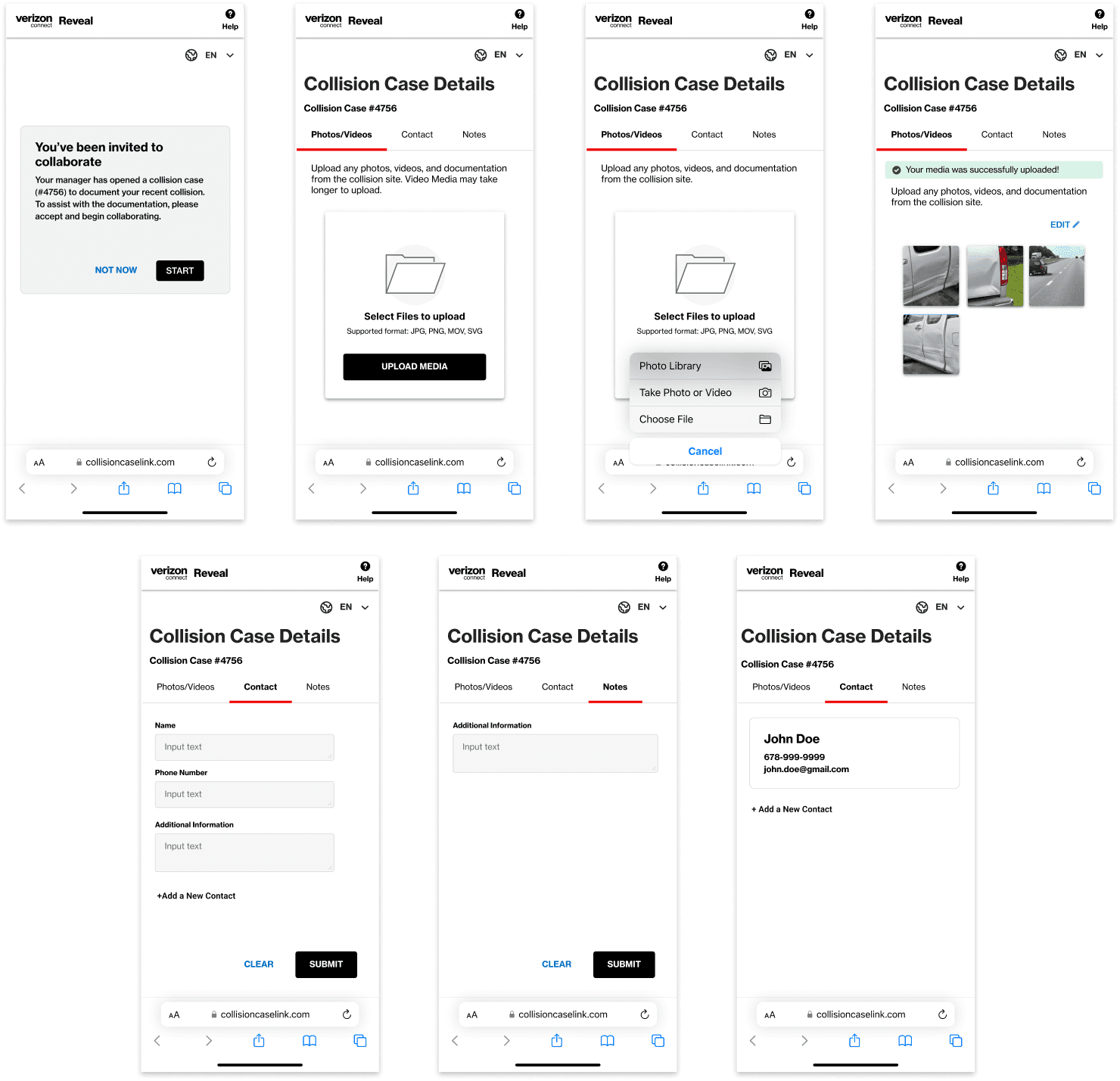
In early research, Managers often said it is cruicial for them to information quickly after a collision. Drivers would send photos through text messages, email, or third-party apps, forcing managers to manually gather and reconcile evidence across channels.


To address this, I designed a driver-facing media upload feature that connects directly to the active collision case.

Once uploaded,

Image shows up in manager’s portal for viewing and download

Design solution

Modal exploration

Not all fleet vehicles are equipped with dashcams, which means some of them will not see any video on their accident modal.


to account for fleet vehicles without dashcams, I designed a flexible UI that maintains visual integrity and balance, whether or not video data is present.

overview

Research Stages

The foundation of my design decisions: the user research our team conducted with fleet managers and drivers recruited through UserInterviews.com


PDF functionality is limited in Framer, please click to read the full document.

reflection

Final thoughts & future opportunity

Reflecting on this journey, there are several areas I would explore further if given more time. A number of promising ideas and feature concepts didn’t make it into the final scope due to time and prioritization constraints.


Here are some of them!

Information Sharing

I didn’t get the chance to explore how our prototype could create easier internal communication and streamline information/document sharing between managers and dispatchers.

Repair Shop Integration

Though users generally indicated interest in an integration with repair shop information, the complexity of actual use case is one of the major reasons it didnt make it to the cut

Export

Allowing fleet managers to export case information directly to insurance portals and other third-party applications is an opportunity to extend the product’s value beyond the platform itself

J Wang casually walking on the streets  of Atlanta at night

©2026 J Wang

J Wang casually walking on the streets  of Atlanta at night

©2026 J Wang

Logo